The most annoying thing about most multi-day tours as a whole is that your first and last days are typically a bust. This is no different for tours in the Galapagos. The first flights into the islands generally arrive between 11:00am and 1:00pm, so most agencies either schedule nothing beyond hotel check-in or, if you request it, a short activity for your first day. Knowing that, we put the pressure on our travel agency to do more, and they acquiesced with a private guide and transportation that began the second we got off the plane.
But first, we had to travel from the mainland to the islands.
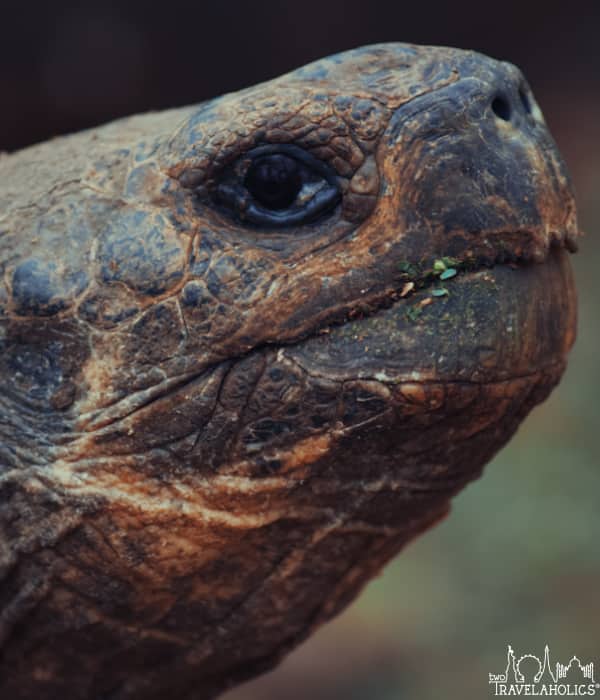
When it comes to flying into the Galapagos, there are two main airports to choose from: Seymour Airport on Baltra Island and San Cristobal Airport on San Cristobal Island. There are advantages to flying into either, but we opted to start in San Cristobal and to fly out of Baltra to maximize the islands we would visit and avoid seeing the same locations a second time (we planned on landing on the easternmost island and working our way west).
We were using Guayaquil, Ecuador, primarily as a stopover, so our journey to the Galapagos started on the mainland with an amazing breakfast spread that our hotel put together. The juice, fruit, bread, and omelet all tasted just so fresh and flavorful. It really set the tone for most of our meals for the next few weeks, particularly when it came to fruits and juices.
After we finished eating, we asked our hotel to order a cab to take us to the airport. One warning on the U.S. State Department’s website for visiting Guayaquil was to always take marked yellow cabs and never hail a cab or car on the street. Yet, as we walked out of the hotel, there was an unmarked car instead of a cab waiting for us. One of the hotel workers greeted the driver, so we assumed it would be okay. Tara and I looked at each other, sighed, and got in (the reviews on Agoda had mentioned this, so we were not completely taken aback). Luckily, we did not have any issues, but we do not recommend being so trusting if you find yourself in the same situation.
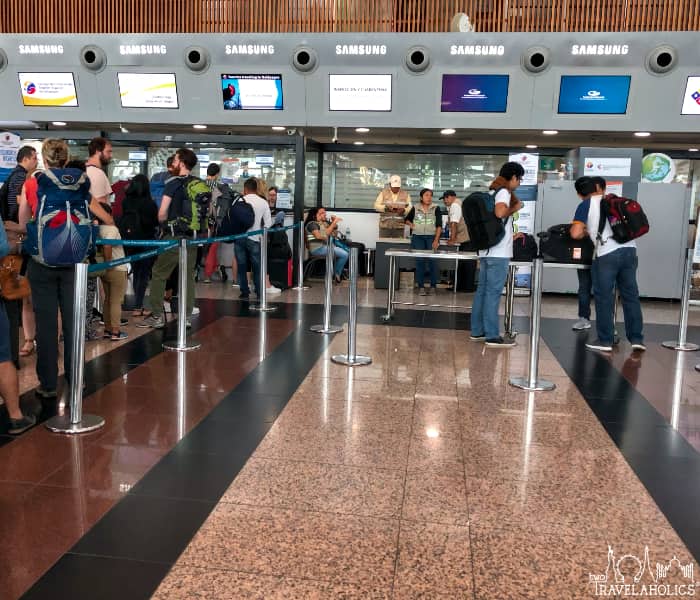
When we arrived at the airport, we found there were two different lines to get through before travelers can even check into their flight: Galapagos traffic control fee ($20 USD per person) and agriculture inspection. We believe this is the same case for flights from Quito. Since the few airlines that service the Galapagos typically fly around the same time, these lines can get quite long. The two lines are independent and can be done in whatever order you choose. If you are flying with someone else, you can wait in each line separately and complete the process for the other person (which we didn’t find out until we had gone through them both).
With the agricultural inspection, sealed snacks were considered fine to bring, something that we could not find the answer to anywhere online before our trip. It took us more than an hour to clear both lines, and on a busier day it might take even longer. Once we passed through, we were able to check into our flight and drop our bags. Security was a breeze.
At the time, we chose TAME Airlines for the flight out since they had a slightly earlier departure than LATAM (TAME has since gone out of business). Avianca also offers routes to the Islands but is usually much more expensive. However, Avianca is part of the Star Alliance, so if you are using miles to buy your flights, you might be able to decrease the price that way. Even though the flight was less than two hours, TAME offered complimentary snacks and drinks, and the plane itself was in better shape than other budget airlines we have flown on.
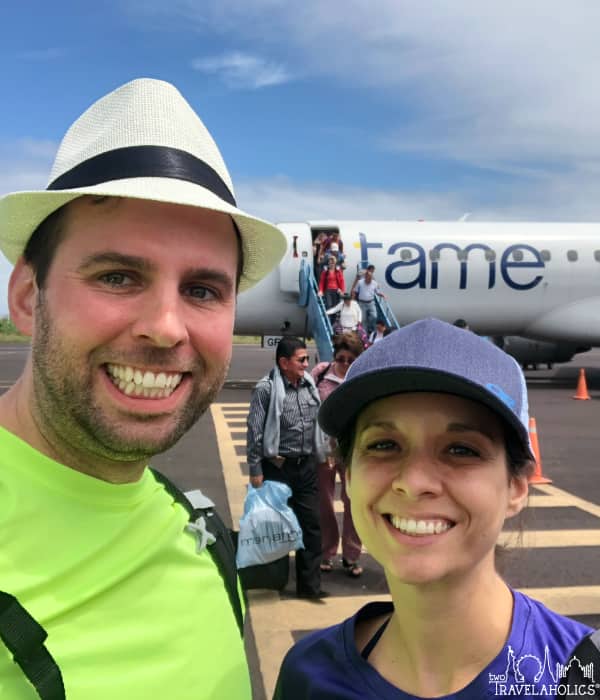
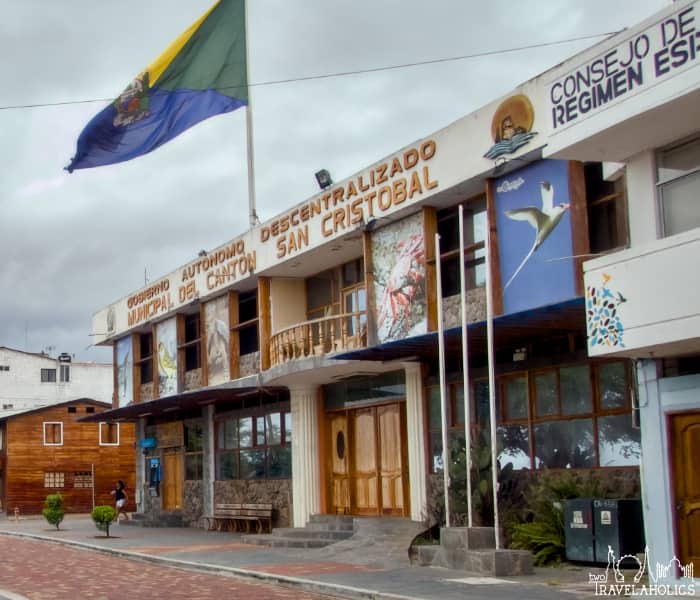
We touched down just before noon in San Cristobal, but then we had to wait in another line to pay more fees, which took about 45 minutes. Every non-Ecuadorian had to pay a National Park fee of $100 USD per person. Once we got through and grabbed our bags, we were waved down by John, our tour guide for the day. He hustled us into a pickup truck and drove us to Hotel Zapaya, where we stayed for the next couple nights.
Getting to the hotel was fast, as it was only a kilometer or so from the airport. Since John wanted to immediately begin taking us around, we dropped off our bags and tossed our camera and a couple other items in a dry bag.
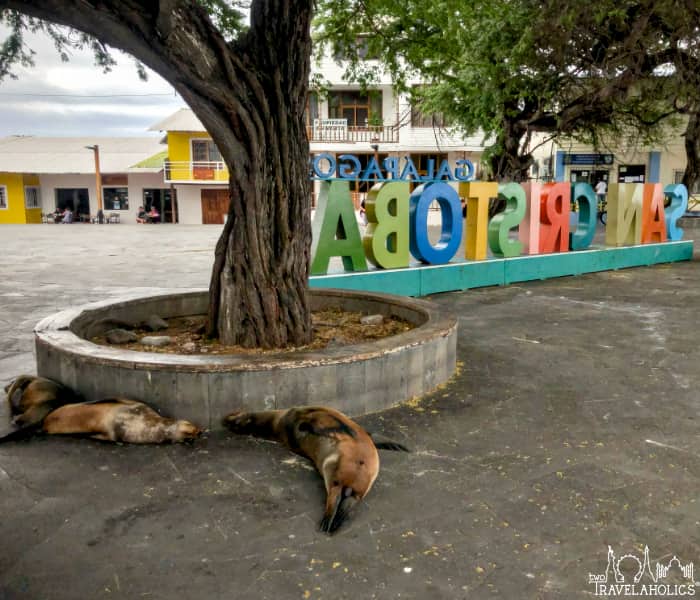
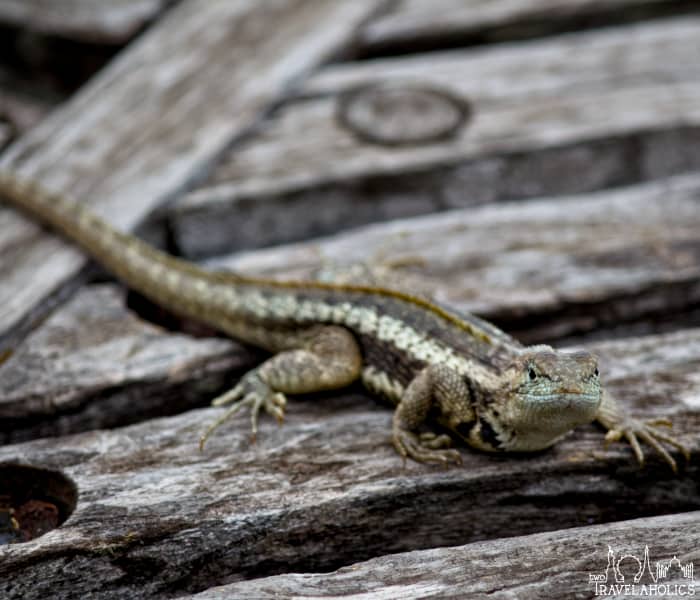
We didn’t have to go far to have our first encounters with local wildlife. Twenty meters in front of the hotel was a small beach and boardwalk where marine iguanas and sea lions were sprawled out sunning themselves. It was very surreal because the marine iguanas were just hanging out on the boardwalk ignoring anyone who walked past them. Most people didn’t pay attention to them either.
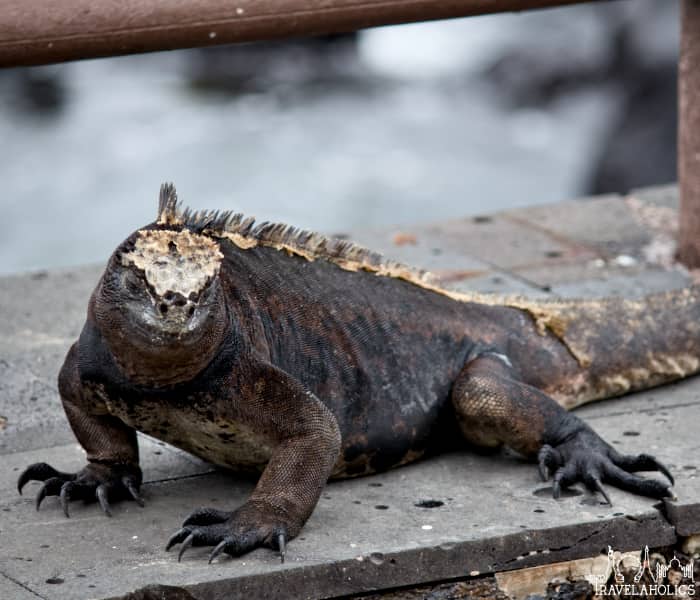
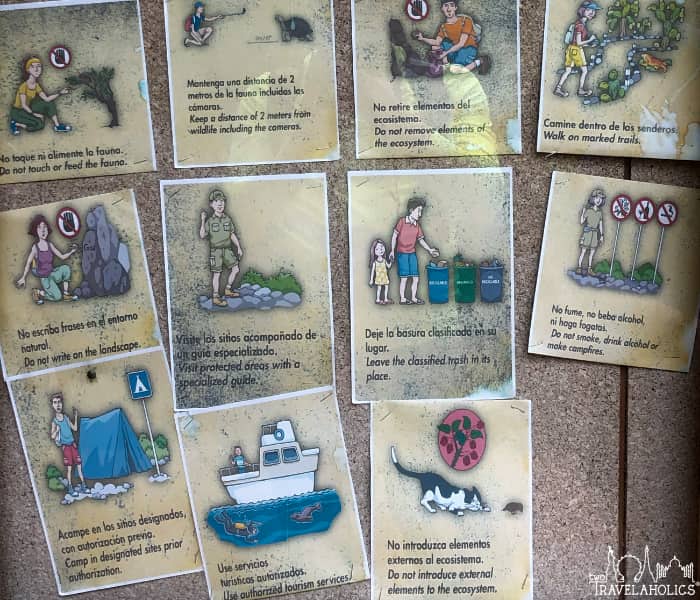
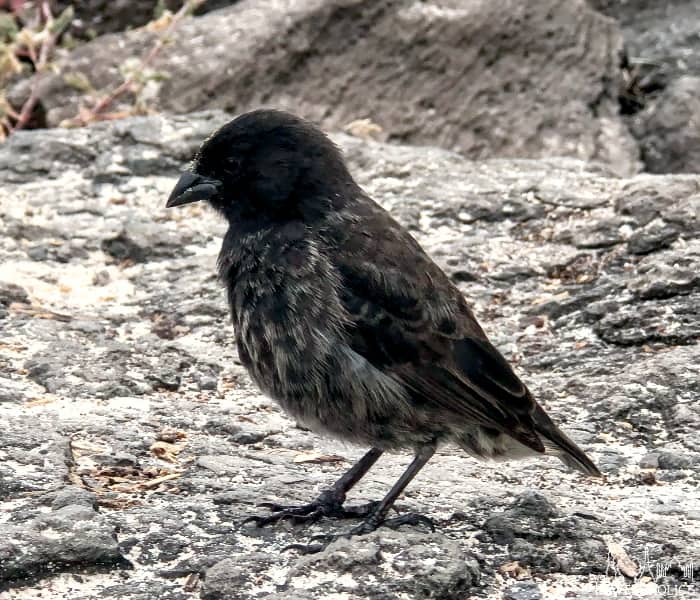
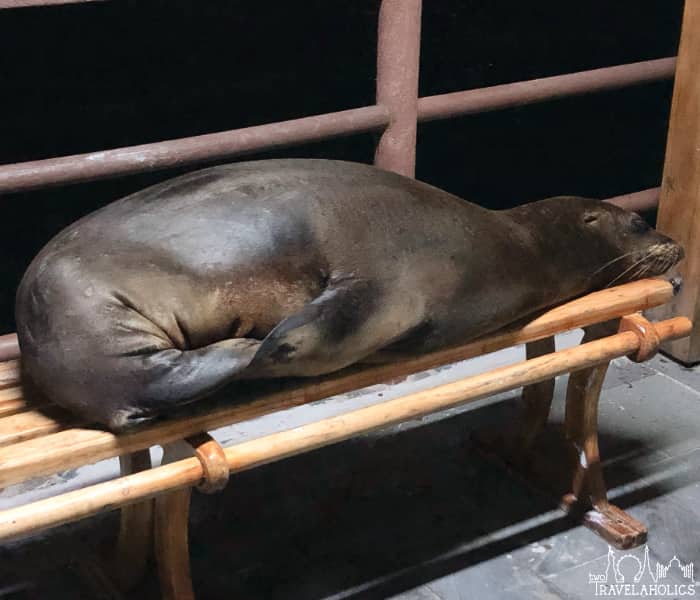
However, Tara and I had yet to be desensitized and made a beeline for the iguanas to start taking the first of what would be thousands of pictures. John reminded us that we were always expected to keep three meters between us and wildlife, but it was tantalizing to be told to keep this distance.
Even from that distance, we could see that the marine iguanas were enormous, measuring around 1.5 meters in length and weighing around 10 kilograms. They have thick, black-skinned bodies with stubby little arms. Their faces are encrusted in a white, crystalized substance. John explained that this was sea salt. Marine iguanas’ main source of food is sea algae, which they swim into the ocean and dive down to eat. They then lounge on the shore expelling salt water through their nostrils (in a sort of sneeze), which then dries on their face. This was the first species we encountered that is endemic to the Galapagos Islands, meaning they are found nowhere else in the world.
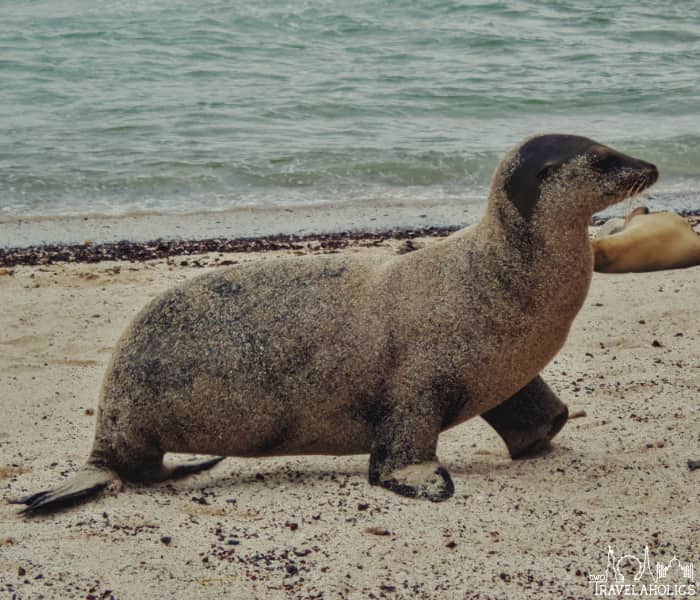
On the other hand, the sea lions looked like they could rip our faces off, so we had no problem respecting the recommended distance. Nearly all of them were snoozing on the beach, but they would occasionally yawn and expose scary, enormous canine teeth. Plus, a good chunk of them were nursing pups, so we gave them a lot more than the recommended 3 meters.
Turns out, we did not even need to get close to experience the smell of their milk. It wafted over the area with a weird, sweet but also rotten odor. John explained that this beach was just accepted as exclusively “owned” by sea lions, while other beaches might be shared by humans and sea lions. We took a few more pictures and then headed to lunch.
The restaurant was only a couple blocks from the boardwalk and offered a nice view (upwind from the beach). Lunch was covered by our tour fee, so we both opted for yellowfin tuna steaks. We learned that is one of the only species around the islands that local fishermen are allowed to catch. Otherwise, nearly all other seafood is imported. As a result, you could find it on nearly every restaurant’s menu. We saw a sign for a local craft brewery—anyone who knows us knows that we love trying local suds—but we decided to skip the beers till dinner.
After lunch, we hopped back in the truck to head to the Highlands and eventually to the other side of the island. The interior of San Cristobal is high in elevation and has a lake inside a crater, creatively named El Junco Crater Lake. It was one of our planned stops for the day. Unfortunately, as we approached the crater, the visibility started decreasing and a slight rain began. Our driver said that we would pass this area again (there was only one road that traversed the island), so we could stop at the outlook on the way back. So, we continued to the next stop on the itinerary: La Galapaguera, a tortoise research and conservation sanctuary.
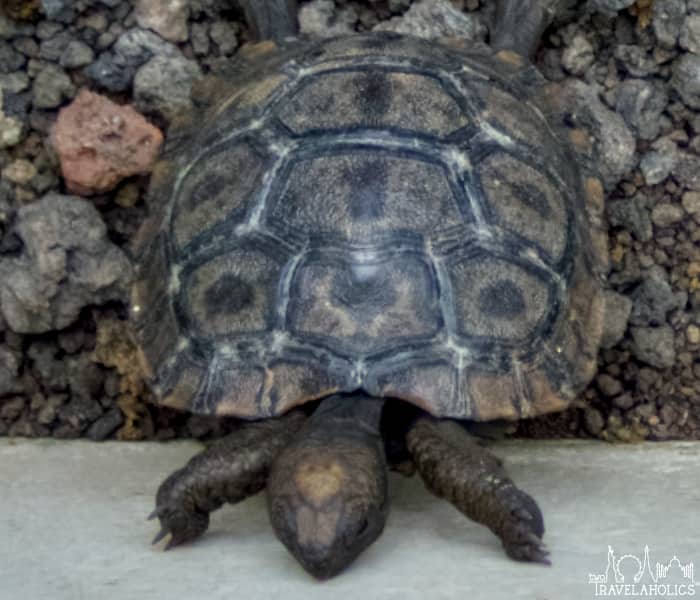
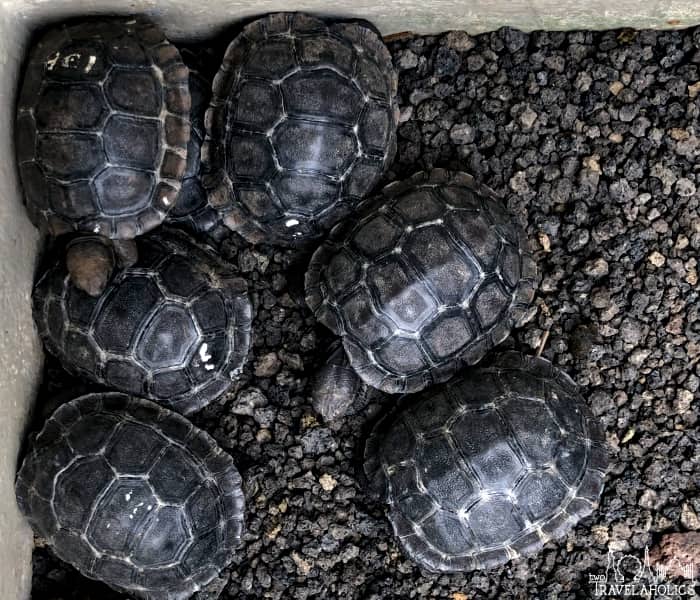
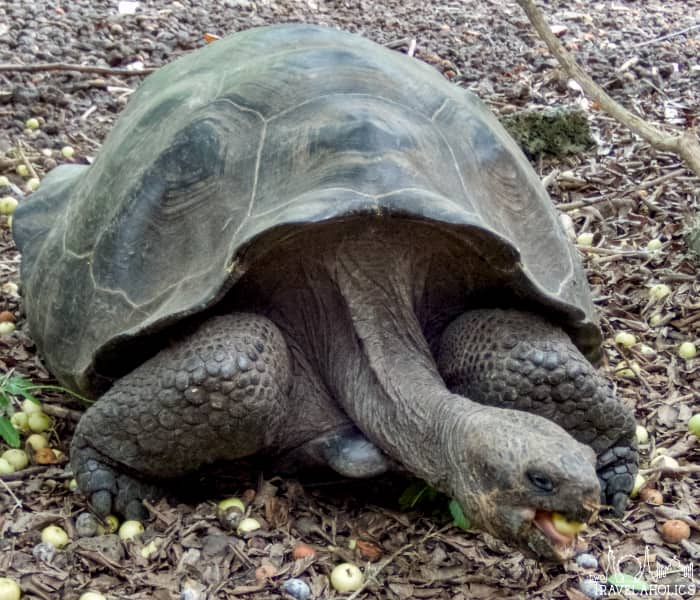
John walked us around the sanctuary—it was a great experience because we were the only visitors. The sanctuary started off as a research and breeding center in 2002. Since the number of tortoises on the island was reaching critical lows, they originally were using incubators to ensure a larger number of successful births. After eight years, they began allowing the tortoises to bury their eggs in soil again and started taking a more hands-off approach. Genesis was the first successfully hatched tortoise from the sanctuary. As tortoises were bred, a number was painted on the top of their shell. Genesis proudly has a number 1 painted on his.
The sanctuary itself was not large but constructed in a way that visitors were limited to a boardwalk that cut through the park. This boardwalk is made of wooden planks that are not too high so tortoises could get over them and meander freely. Although we were unable to spot Genesis, we saw many with numbers in the hundreds written on their shell. The tortoises we saw ranged in size from tiny hatchlings that were kept in locked cages (to prevent them from being stolen!) to gigantic tortoises that happily munched on apples.
It was a good thing John was with us, to warn us about the apples the tortoises seemed to love eating so much. Turns out the type of tree was called a Poison Apple Tree. The apples will make you sick, and the sap is poisonous to humans. The tortoises have built up an immunity and can eat them without issue. After wrapping up the tour, we piled in the truck and headed to the opposite side of the island from where we started.
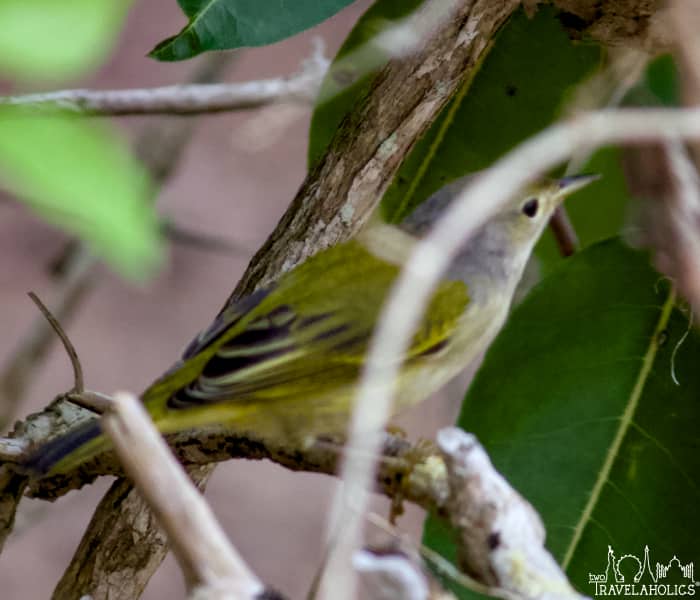
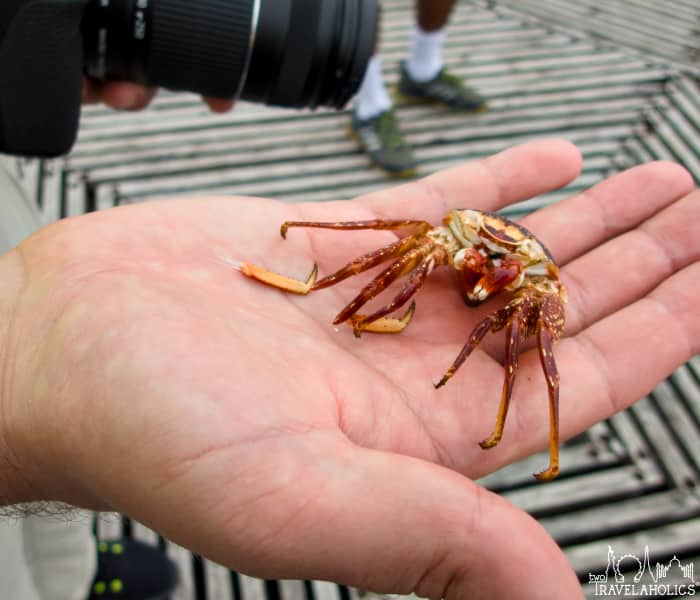
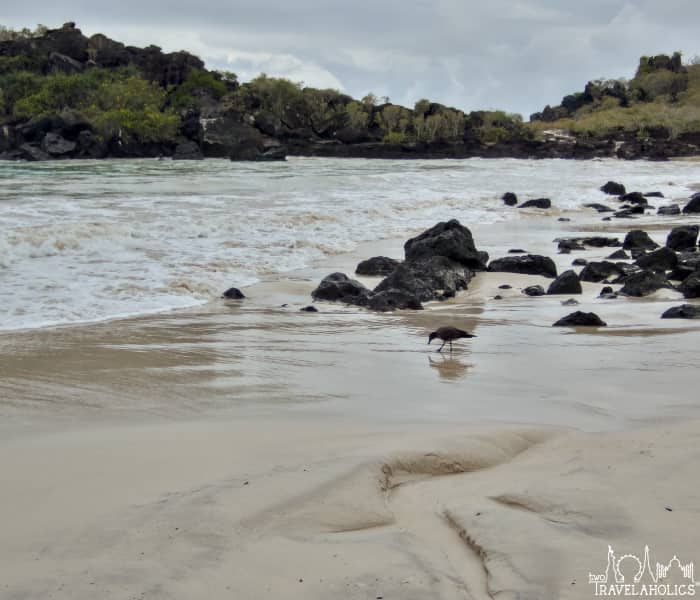
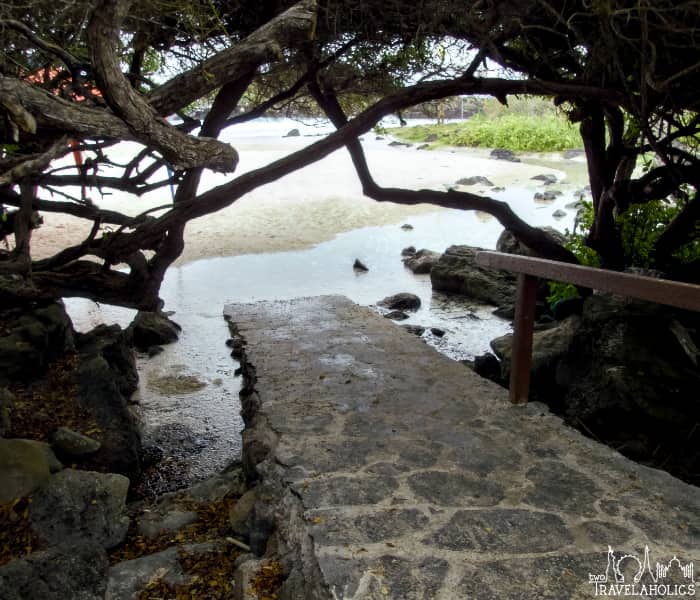
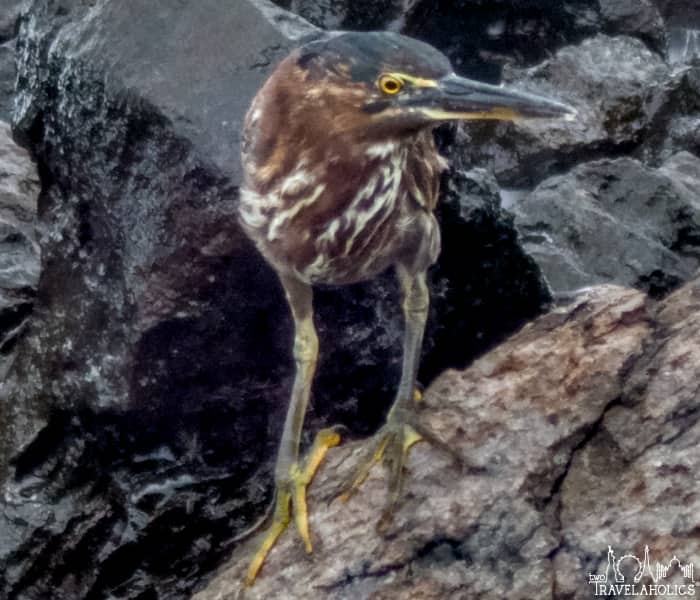
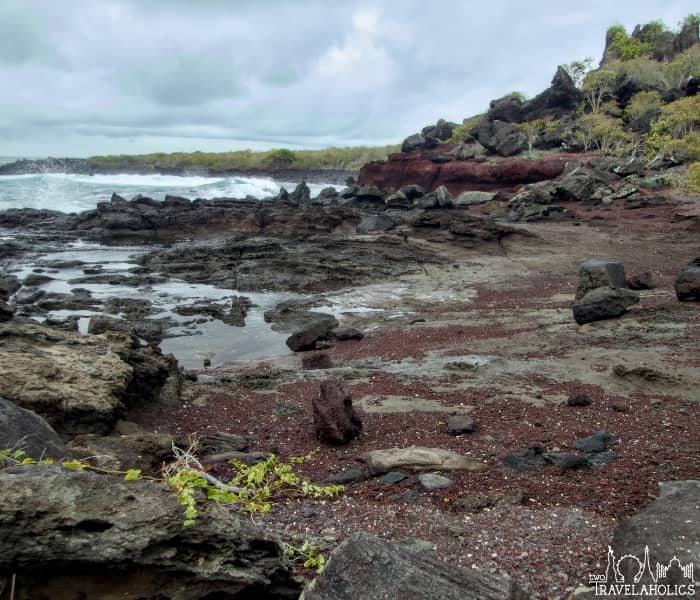
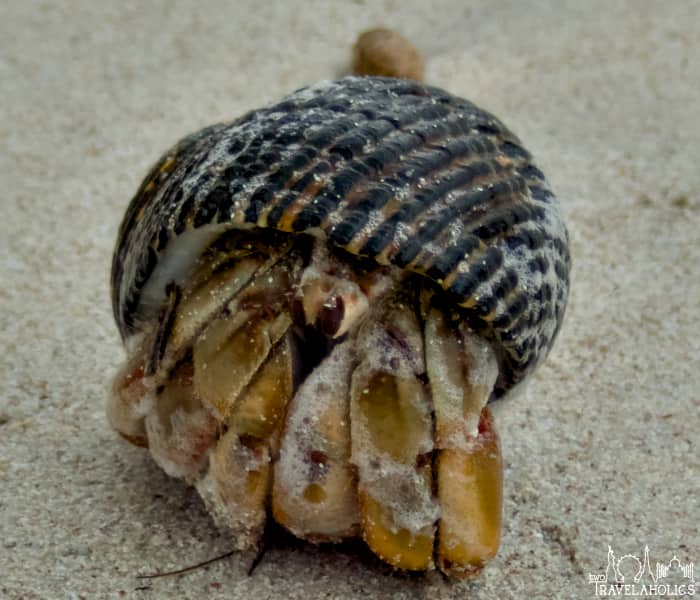
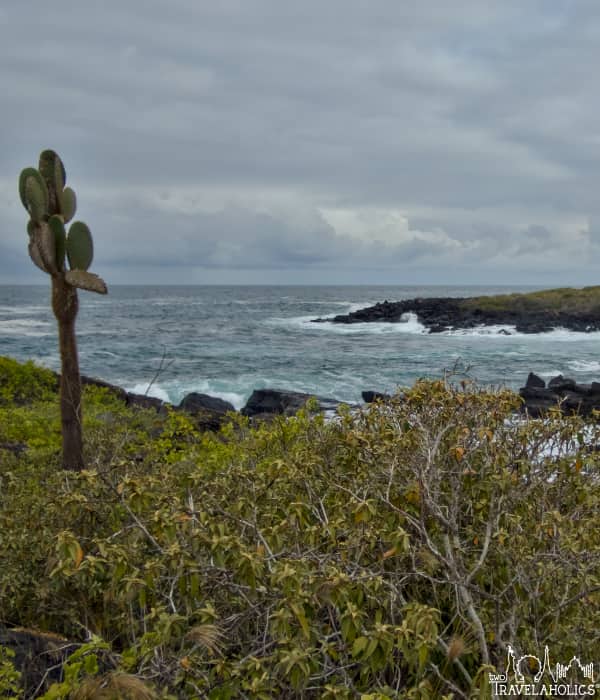
We arrived at our next stop just as the weather started getting a little windier and cooler. The beach was called Puerto Chino, and it is where we spotted our first Sally Lightfoot crabs and lava crabs. Along the cliffs, we saw some yellow warblers and a striped heron. Since the water was a little too rough, we dipped our feet in and stood watching a sea turtle ride the waves. Hermit crabs darted around our toes. We climbed up a cliff for a stunning view of the surrounding area and snapped some photos before leaving.
Our hopes for visiting El Junco Crater Lake were dashed yet again as more clouds came with us and the visibility at the top of the summit was even worse than earlier. We groaned about not getting there earlier, but by that point we had already spent the afternoon face-to-face with marine iguanas, sea lions, giant tortoises, and a beach full of crabs. It was hard to complain too much about missing one viewpoint.
The whole time, John was peppering us with information about the islands. As he dropped us off, John said that a lot of people are excited their first day in the islands, we were the most excited visitors he had encountered. By 5:30pm we were back at the hotel, and the strangest thing was that the sun set at 6:00pm!
After so many flights and hours spent sitting over the previous few days, we decided to go for a run along the boardwalk and through town. It was good to stretch our legs and get some exercise in before heading to dinner.
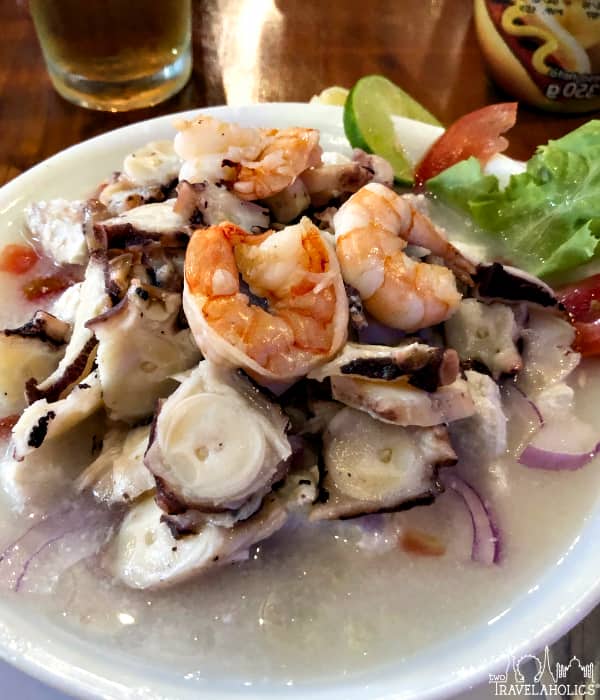
We decided to eat at El Descanso Marinero on Puerto Baquerizo Moreno. Tara saw online that it had great reviews and, most importantly, ceviche. The restaurant itself has a weird, kitschy theme (a mix between a TGI Friday’s and an old-timey seafood restaurant, with the waitstaff dressed as captains and sailors), but the menu looked great, and that’s what matters. I chose the mixed ceviche, which had octopus, fish, and shrimp, and Tara ordered the fish ceviche and fried plantains. We devoured both dishes quickly and learned that plantains and popcorn are an awesome way to soak up all ceviche juice. We capped the meal with a couple beers and were in bed asleep before 10pm.
From Bucket List to Reality: Planning Our Galapagos Trip (How we chose the islands, experiences, and tour provider for our trip.)
Day 2: Snorkeling Kicker Rock: Sea Turtles, Sharks, and Eagle Rays (A day of snorkeling, wildlife, and sunset beers on our first full day in the Galapagos.)
Coming soon! Day 3: Santa Cruz Island: Tortuga Bay and Puerto Ayora (Our first day on Santa Cruz Island combined kayaking, snorkeling, wildlife encounters, and one of the Galapagos’ most beautiful beaches.)
Coming soon! Day 4: South Plaza Island: Land Iguanas, Sea Lions, and a Very Bad Sunburn (A day of wildlife watching, snorkeling, sunset strolls through Puerto Ayora, and recovering from one of the worst sunburns of the trip.)
Coming soon! Day 5: Floreana Island: Pirate History and Sleeping Turtles (Exploring one of the least-visited islands in the Galapagos before an incredible dolphin encounter on the journey back to Santa Cruz.)
Coming soon! Day 6: Boarding Fragata Yacht: Life Aboard Our Galapagos Cruise Begins (Recovering from food poisoning, meeting our crew, and spending an unforgettable afternoon snorkeling with playful sea lions at Mosquera Island.)
Coming soon! Day 7: Fernandina Island: Vicente Roca Point and the Scariest Moment of Our Trip (Wildlife-filled snorkeling, volcanic landscapes, and a terrifying lesson in how quickly conditions can change in the Galapagos.)
Coming soon! Day 8: Isabela Island: Urbina Bay and Tagus Cove (Recovering from a frightening snorkeling experience while exploring Isabela Island, spotting giant tortoises and penguins, and ending the day beneath some of the clearest skies of the trip.)
Coming soon! Day 9: Santiago Island: Egas Port and Sombrero Chino Island (Galapagos fur seals, cave-dwelling sharks, playful penguins, and one of our favorite snorkeling spots of the trip.)
Coming soon! Day 10: A Different Side of Santa Cruz Island: A relaxed day in the Galapagos (Fish markets, giant tortoises, lava tunnels, and a quieter day exploring the Galápagos beyond the wildlife tours.)
Coming soon! Day 11: Back to Isabela Island: Las Tintoreras, Flamingos, and the Wall of Tears (An early-morning visit to Las Tintoreras led to playful snorkeling encounters before a day exploring Puerto Villamil’s tortoise center, wetlands, and wildlife-filled coastline.)


Leave a Reply